35 Newsletter Ideas for Coaches When You’re Out of Things to Say
“I don’t know what to write” is the number one reason I hear from coaches and consultants who don’t use email. Not the tech, not even the time — the blank page. So here are 35 newsletter ideas, grouped into the seven angles that work every single time.

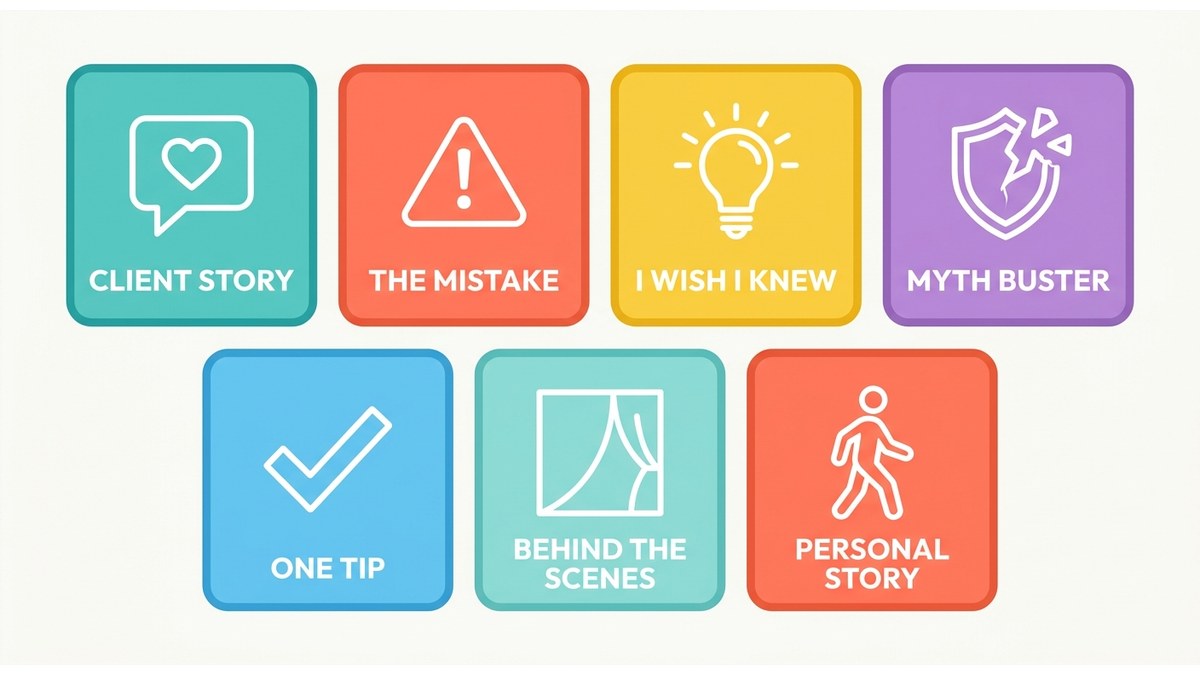
Stuck for newsletter ideas? You don’t need inspiration — you need angles. Seven of them work for coaches every single time: the client story, the mistake you keep seeing, the hard-won lesson, the myth-buster, the one simple tip, behind the scenes, and the personal story. Rotate two or three and the blank page disappears. 🎯
In this article
- Angle 1: The client story (ideas 1–5)
- Angle 2: The mistake you keep seeing (6–10)
- Angle 3: The “I wish someone had told me” (11–15)
- Angle 4: The myth-buster (16–20)
- Angle 5: The one simple tip (21–25)
- Angle 6: Behind the scenes (26–30)
- Angle 7: The personal story with a lesson (31–35)
- How to never run out of newsletter ideas
- Or stop staring at the blank page
- Frequently asked questions
I get it, because I was in exactly the same position when I started putting content out there. It’s genuinely hard to sound like an expert when you were never a natural marketer. You open the editor, the cursor blinks, and you close the tab. Next week, same thing.
The problem was never a shortage of things to say — coaches and consultants have more raw material than almost anyone. It’s that “write a newsletter” is far too big a question to answer at 9pm on a Tuesday. You don’t need inspiration. You need angles.
An angle is a shape you pour your week into. Give a coach a blank page and they freeze; ask them what their clients always get wrong and they talk for ten minutes without pausing. Below are the seven angles, with five concrete ideas inside each. Take them literally — they’re written to be usable tonight. 👇
Angle 1: The Client Story
People don’t remember advice. They remember stories. Three beats, always: where they were, what shifted, where they are now. Anonymise freely, ask permission when the story is recognisable, and keep the shift small — a believable small change persuades better than a miracle.
1. The client who almost quit
The person who was two sessions from walking away — from the coaching, the business, the role — and what changed their mind. Be honest about the wobble, because that’s the part your reader is living right now.
2. The session where the real problem finally came out
Every coach has had the “actually, can I tell you what’s really going on?” moment forty minutes in. Write about the gap between the presenting problem and the actual one. It tells your reader that the thing they’re embarrassed about is normal.
3. The client who got the opposite of what they came for
Someone hired you to get promoted and left the company instead. Tell it straight, including the part where you were both surprised. It signals that you coach the person rather than sell a fixed outcome.
4. The one who did nothing for six weeks, then everything at once
Progress is lumpy, and almost nobody says so publicly. Write about the client who looked stuck while something assembled underneath, and what you did instead of panicking. Half your list is in their own quiet six weeks right now.
5. The client you turned down
Who you said no to, and why — wrong timing, wrong problem, needed a therapist rather than a coach. Turning away money is the least salesy thing a person can do. It also pre-qualifies your next enquiries beautifully.
Angle 2: The Mistake You Keep Seeing
What’s the one thing your clients always get wrong before they work with you? Name it, explain why smart people fall into it, show the fix. This positions you as the expert without you ever saying “I’m an expert” — just be hard on the mistake and gentle with the person making it.
6. The sentence you hear in the first ten minutes of every intro call
“I just need to be more disciplined.” “I’m probably overthinking this.” Quote the phrase, then explain what’s usually underneath it. Readers get the eerie feeling you were in the room — because you were, hundreds of times.
7. The goal that turns out to be somebody else’s goal
Half the targets people bring to a first session were inherited from a parent, a partner, or an industry they never chose. Give them two questions to tell the difference. Most people have never been given permission to ask.
8. The mistake you spent years making yourself
The error you now spot instantly in clients because you lived it for a decade. Say what it cost you and the signal you’d watch for now. Naming your own mistake removes every trace of lecture from the email.
9. The internet advice in your niche that quietly makes things worse
Every field has a tip that works for a narrow group and backfires for everyone else — the 5am routine, the boundary script that starts a war. Explain who it actually works for. Nuance is rare online, and rarity gets read.
10. Confusing being busy with making progress
The consultant rewriting the deck a fourth time, the leader doing everyone’s job but their own. Describe what the busyness is protecting them from, then give one way to check whether this week moved anything. Uncomfortable in the right way.
Angle 3: The “I Wish Someone Had Told Me”
Share something you learned the hard way, with the cost attached. Vulnerability builds more trust than polished advice ever will, and this is the angle most coaches skip because it feels unprofessional. It isn’t. One rule: write from the scar, not the open wound.
11. What you believed in your first two years that was completely wrong
Maybe you thought referrals would carry you forever, or that being good at the work was the whole job. What you assumed, what happened, what you’d do differently. Anyone a step behind you reads this as a map.
12. The qualification you thought you needed first
Almost everyone in this profession hid behind a certification before starting. Tell yours honestly, including whether it turned out to matter. Readers using “one more training first” as a delay tactic will feel personally addressed.
13. The client you should never have taken on
The one where you ignored the feeling in your stomach because you needed the income. Name the warning signs and the boundary you now hold because of it. It doubles as a story about self-respect.
14. The advice you used to give and have since retired
Something you taught confidently three years ago and no longer believe. Explain what changed your mind. Publicly changing your mind is a rare, high-status move, and it makes everything else you say more credible.
15. The season you nearly went back to a job
The quiet quarter, the month you opened your calendar and it was empty. What you actually did, and what held. This is the email people reply to, because everyone self-employed has had that month and nobody posts about it.
Angle 4: The Myth-Buster
Pick a common belief in your niche that’s flat-out wrong and challenge it directly. “Everyone says X. Here’s why that’s bad advice.” These get the most replies, because people have opinions. Two conditions: you have to actually believe it, and you attack the idea, never a named person. ⚠️
16. “Motivation is the problem”
Almost nobody who comes to you is short of motivation. They’re short of a system, or avoiding something the goal would force them to face. Say it plainly and take apart why the motivation framing is so popular.
17. “You need to be ready before you start”
Readiness in most fields is produced by starting, not required before it. Make the argument with one example from your practice, then give them the smallest version they could do this week. Provocative, and it moves people rather than entertaining them.
18. The industry standard nobody in your field questions
Six-month packages. Annual reviews. Weekly one-to-ones. Pick the convention everyone treats as physics and ask whether it serves the client or the provider. Be specific about when it does work — that’s what separates an argument from a hot take.
19. The success story your niche keeps quoting out of context
Every field has a famous example repeated as a template while everyone ignores the conditions that made it work. Explain what was really going on, and what someone without those conditions should do instead.
20. “A good coach gives you the answer”
Or the consulting version: that you’re paying for the deck. Explain what people are really buying — better questions, an outside view, someone who won’t let them dodge. This one doubles as an elegant explanation of how you work.
Angle 5: The One Simple Tip
One tactical thing they can do today. Not a twelve-step framework — one action, one result. These are the emails people screenshot, and the ones you can write in fifteen minutes on a fully-booked week. When you’re wondering what to write in a newsletter and have no time at all, it’s always this angle.
21. The one question to ask before you say yes to anything
Give them the actual filter you use with clients who over-commit, then show it working on one real thing from your week. One question, one page, done. People adopt tools they can hold in their head.
22. The two-minute version of something you do with clients
Take one exercise from your toolkit and shrink it to something a reader can do at their desk before lunch. Not the full protocol — the pocket version. Giving away real method never costs you clients.
23. One sentence for the conversation they’re dreading
Hand them the exact words — asking for the raise, ending the engagement, telling a co-founder the truth. The sentence, then two lines on why it works. Scripts are the most-saved thing coaches send, because dread is mostly about not knowing how to open.
24. The one thing to stop doing this week
Subtraction advice stands out in an inbox full of additions. Pick something that quietly costs your clients — the status meeting, the third revision — and make the case for deleting it for one week. Frame it as an experiment and far more people try it.
25. The five-minute Friday review you actually use
Three questions, five minutes, end of the week. Give them yours verbatim, including the awkward one you’d rather skip. Every time your reader runs it, they think of you. That’s the quiet compounding you want.
Angle 6: Behind the Scenes
Pull back the curtain on how you work. Coaches forget that their process is content — what feels obvious to you is fascinating to your audience, because they’ve never seen the inside of this work. It also does the most quiet selling, since a reader who understands your method can picture being coached by you.
26. The twenty minutes before a session
Your prep: the notes you reread, the one question you write at the top of the page, how you clear your head between clients. Mundane to you, revealing to them. It signals care in a way no testimonial can.
27. What your session notes actually look like
What you capture, what you deliberately don’t, how you track a thread across months. Blank out anything real, obviously. Prospective clients read it and realise their history with you would be held properly.
28. How you decide someone isn’t a fit
Your actual criteria: who you’re great for, who you refer elsewhere, the questions you ask to work it out. Publishing your filter attracts the right enquiries and repels the wrong ones before either of you wastes an hour.
29. Why your program is the length it is
Three months, six months, one intensive day — you had a reason, and nobody has heard it. Explain what happens in each phase and why the shape follows the work. This answers the pricing objection weeks before anyone raises it.
30. What you’re studying right now, and why
The book, the training, the idea you’re chewing on and what it’s already changing in your practice. Thinking in progress, not a finished review. It shows you’re still moving, which is what people want from someone they’d trust to move them.
Angle 7: The Personal Story With a Lesson
Something that happened this week — at the supermarket, with your kids, on a walk — that connects to a coaching principle. These feel effortless to read and remind subscribers there’s a real human behind the emails. Keep the moment small; if the lesson needs a paragraph of explaining, it’s the wrong story.
31. The thing a child said that undid an argument you’d had for years
Kids compress what adults spend fortunes untangling. Report what was said, exactly, and what it made you notice. Two hundred words is plenty. Everyone has heard advice on the topic; nobody has heard it in your kitchen.
32. The problem that solved itself when you stopped working on it
The walk, the shower, the drive where the answer arrived unrequested. Tell it as a story about how your thinking works, then connect it to why you build space into sessions instead of filling every minute.
33. A five-minute conversation with a stranger you’re still thinking about
The taxi driver, the person in the queue, the neighbour who said one thing in passing. These work because they’re unpredictable, and unpredictability is what gets an email read to the end. Land it on one observation, not a life philosophy.
34. Something you’re currently bad at
A language, a sport, a skill in your own business. Write about being a beginner while your day job is helping other people be beginners. It puts you on the same side of the table as your reader.
35. The habit you changed after a client said one sentence to you
Coaching runs both ways and clients rarely know it. What they said, and what you altered in your own week because of it. It’s a story about listening — the trait people are actually shopping for when they choose a coach.
How to Never Run Out of Newsletter Ideas
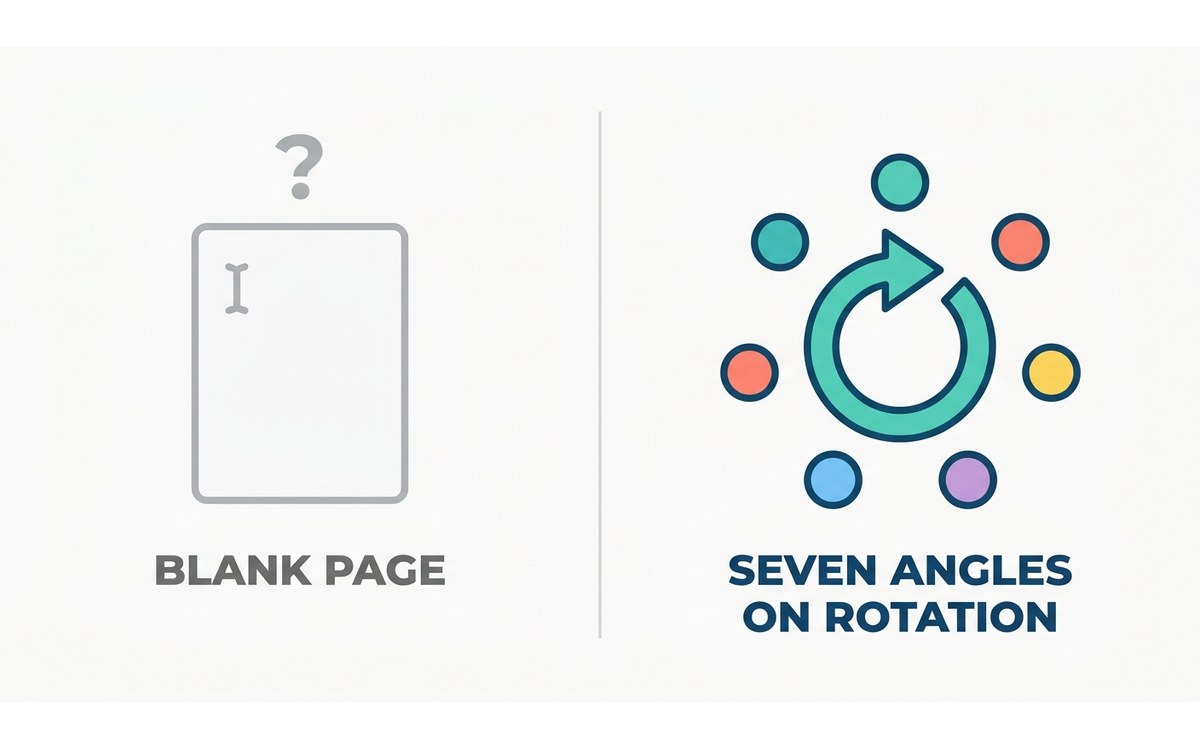
Here’s the part that matters most: you don’t need all seven angles. Pick the two or three that feel natural — the ones where you immediately thought of an example — and rotate them. That’s two or three months of weekly emails from three shapes, and nobody notices the pattern, because the content is different every time.
Weekly is the sweet spot: often enough that you’re the person who comes to mind when someone’s situation shifts, rare enough to sustain for years. Fortnightly is a respectable second. Monthly is where most coaches quietly disappear from their subscribers’ memory. 📩
Then do the one thing that kills the blank page permanently: keep a running notes file on your phone. A client says something striking — one line. You explain the same thing twice in a week — one line. You get annoyed at some advice on LinkedIn — one line, that’s a myth-buster. Two weeks of that and you open a file with fifteen email newsletter ideas instead of an empty editor.
And batch when it’s flowing. A week where three ideas arrive at once isn’t a week to write one email — draft three and bank two. Repetition is allowed too: most of your list didn’t read what you sent eight months ago, and the ones who did have forgotten it.
One last thing on where these emails fit. A newsletter isn’t a standalone chore — it’s the part of your funnel that keeps you present between the day someone finds you and the day they’re ready. It sits behind a freebie people actually want and a short run of welcome emails, laid out end to end in our guide to a simple sales funnel for coaches. Still filling the list? Start with how to get coaching clients. ✅
Or Stop Staring at the Blank Page Altogether
Everything above works whether or not you ever hire anyone. Steal the angles, keep the notes file, write it yourself — that’s a complete system, and plenty of coaches run it happily for years. Nobody knows your practice the way you do.
But I’ll be straight about the failure mode I see constantly. It isn’t that coaches can’t write. It’s that week eleven arrives, you’re fully booked with actual clients, and the email doesn’t get sent. Nor the week after. A newsletter that lives in your head does nothing for your practice.
That gap is the entire reason Nautilus’s done-for-you email marketing exists — and these seven angles are literally the framework we use to generate newsletters for customers. You answer questions about your practice: who you help, what they get wrong, the stories you’re willing to tell. A real team plus AI drafts the emails in your voice, and you review and approve. Nothing goes out that you haven’t seen, and we only ever email people who asked to hear from you. The coach-specific version lives at email marketing for coaches.
One flat plan at $199 a month, no trial and no free tier, with a 30-day money-back guarantee on your first month — all on the pricing page. The comparison worth making is the $500–$5,000 a month an agency quotes for the same scope.
Not sure what your emails should be doing for your practice? Answer a few questions about your work and your free custom roadmap will map it out — the freebie, the welcome emails, and the weekly newsletter that keeps you in mind until people are ready.
Claim my roadmapFree · No credit card · 3 minutes
Either way, do this before you close the tab: pick two angles and write one line for each. Not a draft — one line. That’s the blank page beaten, in about ninety seconds. 🎯
Entrepreneur | Co-founder @ Nautilus, the done-for-you email marketing service for coaches & consultants. I write about email marketing, funnels, lead generation and everything I learned during the past 15 years building businesses, writing software and generating leads in the digital world.
Frequently Asked Questions
What should I write in my coaching newsletter?
Write from an angle instead of from a blank page. The seven that work reliably for coaches are a client story, the mistake you keep seeing, a lesson you learned the hard way, a myth you want to bust, one simple tip they can use today, a behind-the-scenes look at how you actually work, and a personal story with a lesson attached. Pick the two or three that feel most natural to you and rotate them. The material itself should come from your practice — the questions clients ask, the things they get wrong, the moment something clicked — not from whatever your industry happens to be talking about this week.
How often should I send a newsletter?
Weekly is the sweet spot for most coaches and consultants. It’s frequent enough that you’re the person who comes to mind when a subscriber’s situation finally shifts, and rare enough that you can keep it up for years without resenting it. Every two weeks is a respectable second choice. Monthly is where most practices quietly fade out of their subscribers’ memory. What matters more than the frequency is the rhythm — a predictable weekly email beats a brilliant one that shows up whenever inspiration strikes.
How long should a coaching newsletter be?
Shorter than you think. Two hundred to five hundred words covers most of these angles, and a good one-simple-tip email can be under a hundred and fifty. Your subscribers are reading on a phone between two meetings, not settling in with a magazine. One idea told properly beats five ideas crammed together — and the short ones are the emails you can still write on a fully-booked week, which is the whole game.
What do I write when I have nothing new to say?
You almost certainly have plenty to say and no angle to say it through, which feels identical from the inside. Go back over the last seven days: the question a client asked twice, the thing you found yourself explaining again, the moment someone’s face changed. Any one of those is a newsletter. Keep a running notes file on your phone and add a line whenever something happens, so the next blank page starts with fifteen options on it. Repeating yourself is allowed too — most of your list didn’t read the version you sent eight months ago, and the ones who did have forgotten it.
Should I write my newsletter myself or have it done for me?
Write it yourself if you enjoy it and you can sustain it — nobody knows your practice the way you do, and these seven angles will keep you supplied for years. Have it done for you if the honest truth is that it isn’t getting written, because a newsletter that lives in your head does nothing for your practice. That is the reason Nautilus exists: you answer questions about your work, a real team plus AI drafts the newsletters in your voice, and you review and approve before anything goes out. One flat plan at $199 a month with a 30-day money-back guarantee on your first month, and we only ever email people who asked to hear from you.
Never Stare at the Blank Page Again
These seven angles are the same framework we use to write newsletters for coaches. Get your free custom roadmap and see exactly what your emails should be doing — from freebie to weekly newsletter.
Claim my roadmapNo credit card · 3 minutes