How to Start an Online Coaching Business in 2026 (Step-by-Step)
Starting is cheap. Staying is the hard part. Most new coaches get the niche and the offer roughly right, then quietly stall on the one asset that would have made everything else compound — so here’s the whole thing in order, including the step almost everyone skips.

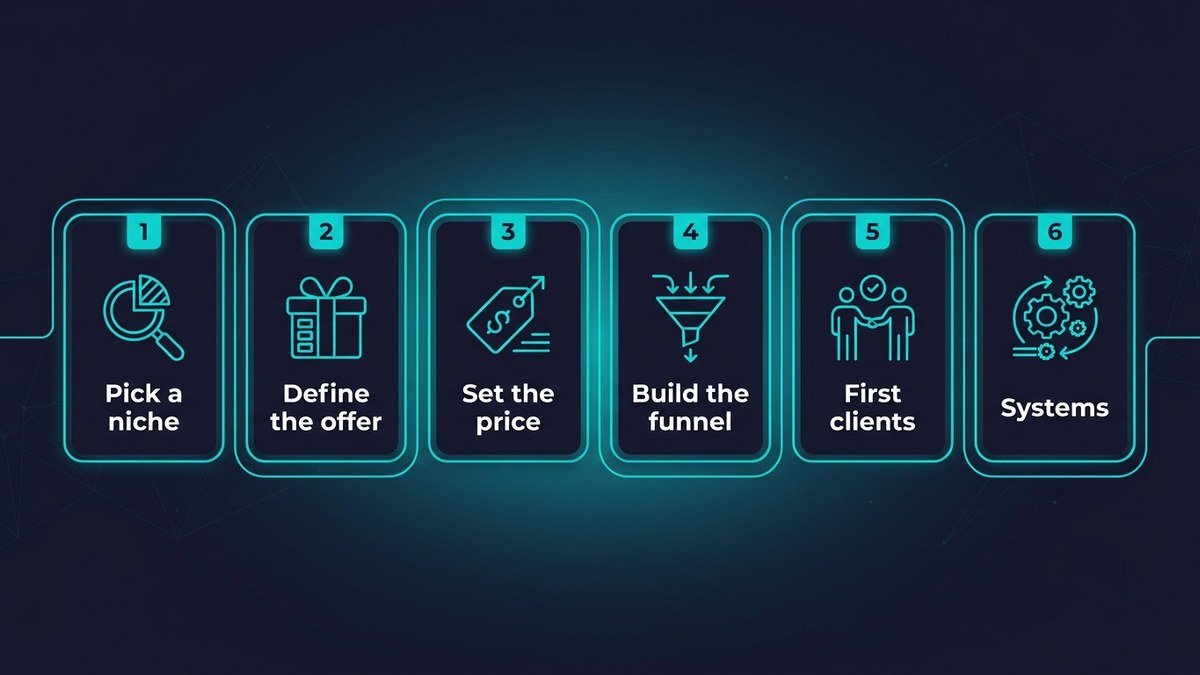
How to start an online coaching business: pick a narrow niche, define one clear offer and price it, set up a simple way to be found and to capture interest with a freebie and an email list, get your first clients through people who already trust you, then deliver, collect proof, and only then scale. 🎯
In this article
- How to start an online coaching business: is it worth it in 2026?
- Step 1: Pick a niche narrow enough to be obvious
- Step 2: Define one offer and the transformation it delivers
- Step 3: Price and package it
- Step 4: Set up the one asset most new coaches skip
- Step 5: Get your first clients
- Step 6: Build the systems that let you scale without burning out
- How Nautilus handles the marketing so you can coach
- Frequently asked questions
How to Start an Online Coaching Business: Is It Worth It in 2026?
Yes — but not for the reason most people are sold on it. It’s worth it because the cost of starting is close to nothing and the ceiling is genuinely high. It is not worth it if you’re expecting it to be quick.
Be honest about the landscape, though. Anyone with a laptop and a video call link can call themselves a coach, which is exactly why buyers are more skeptical than they were five years ago. Low barriers cut both ways: easy for you, easy for everyone else.
So what separates the coaches still doing this in three years from the ones who quietly stop? Almost never talent, and almost never the website. Two things: consistency and a system. Consistency means still showing up in month seven, when nothing has visibly worked yet. A system means the showing up accumulates instead of evaporating.
That’s why step 4 is longer than the rest. The niche, the offer, the price — you can get those roughly right in a weekend and refine forever. Step 4 decides whether the next twelve months compound or reset. ⚠️
You don’t need the whole business figured out to begin. A person you help, a thing you help them with, a way to keep hold of everyone who shows interest.
Step 1: Pick a Niche Narrow Enough to Be Obvious
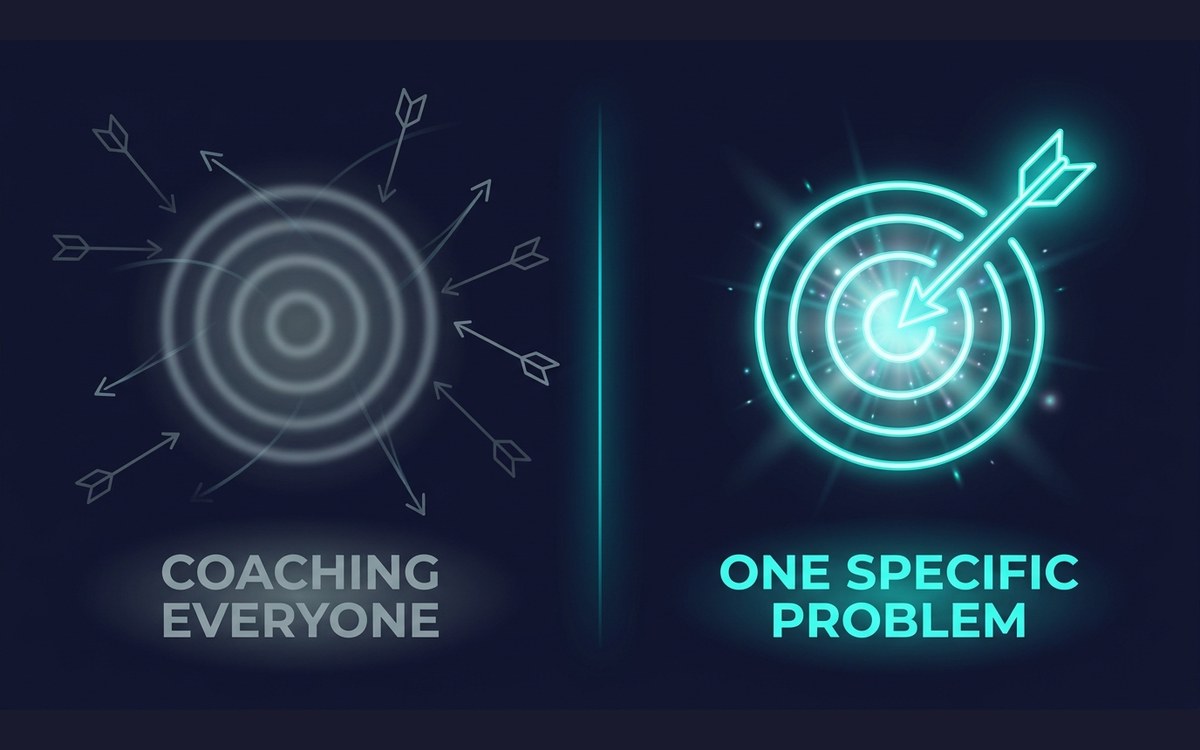
Your niche isn’t a category, it’s a specific problem belonging to a specific person. If someone can’t tell within five seconds of reading your bio whether you’re for them, the niche isn’t narrow enough yet.
There’s an old marketing line about riches being in niches, and it’s become a cliché because it’s true. “I’m a life coach” attracts nobody, because nobody wakes up at 2am searching for a life coach. They search for the thing that’s actually keeping them awake: the job they can’t leave, the relationship they can’t fix, the first management role that made them miserable.
“I help people find more balance” versus “I help engineers who just got promoted into management stop doing their old job.” Same coach, potentially. Only one makes a stranger stop scrolling and think that’s me. Narrowing feels like shrinking your market. It isn’t. It makes every later step easier — you know what to write about, which rooms to be in, and referrals get effortless because people can finally remember what you do.
How to actually choose it
Look at the intersection of three things: a problem you’ve solved or watched up close, people you genuinely like being around, and a situation urgent enough that people pay to fix it. That third one is where most new coaches go soft. Mild dissatisfaction doesn’t open wallets. A deadline, a transition, or real pain does.
Whatever you did before coaching is your unfair advantage here, and most people bury it. Fifteen years in finance, or nursing, or running a restaurant means you understand a world from the inside. Coach into that world first.
And you’re allowed to be wrong. Pick the best guess you have this week, work with five people, and let their actual language reshape your positioning. Niches get discovered in conversations, not in a document. If you already know roughly where you’re heading, we’ve written the specifics for life coaches and for business coaches.
Step 2: Define One Offer and the Transformation It Delivers
One offer. Not a menu. When you’re starting a coaching business, a page listing five packages reads as uncertainty — and it forces the buyer to do work they didn’t sign up for.
People don’t buy coaching. They buy a change in their situation. So write your offer as the gap you close: where they are now, where they’ll be after, and roughly how long that takes. “Twelve weeks of 1:1 coaching” describes the container. “In twelve weeks you’ll have run the difficult conversations you’ve been postponing for a year” describes the reason to buy.
Promise only what you control: the process, the structure, the accountability, your attention. You don’t control whether they get the promotion. Honest promises are also better marketing, because your buyer has heard the inflated version a hundred times and stopped believing it.
Which format to start with
1:1 coaching is where almost everybody should begin. It pays the most per hour, and more importantly it teaches you what clients actually struggle with, in their words. That raw material becomes your content, your freebie, and eventually your group program.
Group coaching breaks the hours-for-money ceiling and adds peer energy 1:1 can’t replicate. But it needs a pipeline big enough to fill a cohort, which usually makes it a year-two move.
A self-paced program or course sounds like the dream and is the most common expensive mistake. It takes months to build, an audience you don’t have yet to sell, and teaches you nothing about your market while you’re making it.
Practical shape for a first offer: a fixed eight-to-twelve-week engagement, a set number of calls, one clear promise, a defined start and end. Fixed beginnings and ends make the decision easy and your calendar predictable. ✅
Step 3: Price and Package It
Price the outcome, not the hour. And accept up front that your first price is a judgement call, not a calculation — anyone handing you a specific number for your specific market is guessing.
Hourly pricing caps your business and warps the relationship. It turns the client into an hour-counter and makes you feel guilty for the breakthrough that happened in nine minutes. One number for the whole engagement keeps everyone focused on the result.
To land on a number, weigh what solving this problem is worth to the buyer, what comparable coaches serving the same client openly charge, and your own track record today. Executive coaching for a director sits in a very different band from confidence coaching for new graduates. That’s not unfairness, it’s what’s at stake.
The two mistakes I see most
The first is pricing so low you resent the work. Cheap coaching attracts less committed clients, which produces worse results, which gives you nothing to show. It’s a hard loop to climb out of.
The second is pricing high to look premium while privately terrified, then folding the moment someone hesitates. Discounting under pressure teaches your buyer the number wasn’t real. Pick a price you can say out loud without flinching, and hold it.
You will raise it. The right moment is usually when you’re close to full and slightly relieved when someone says no. Raise it for new clients, honour what existing clients agreed to, and tell them plainly they’re grandfathered. That conversation buys enormous goodwill.
One boring but important note: registration, tax, contracts, and professional insurance work completely differently depending on where you live, and I’m not the person to advise you on any of it. Spend an hour with a local accountant or lawyer before you invoice anyone. That’s the whole of my business-setup advice.
Step 4: Set Up the One Asset Most New Coaches Skip
Being findable is step one. Keeping hold of the people who find you is the step that compounds — and it’s the one nearly everyone postpones until “things are more established.”
I get asked a version of this constantly by newer coaches: what’s the ONE thing to focus on to get clients consistently? My answer surprises people, because it isn’t lead gen. It’s owning the relationship with the people who already raised their hand.
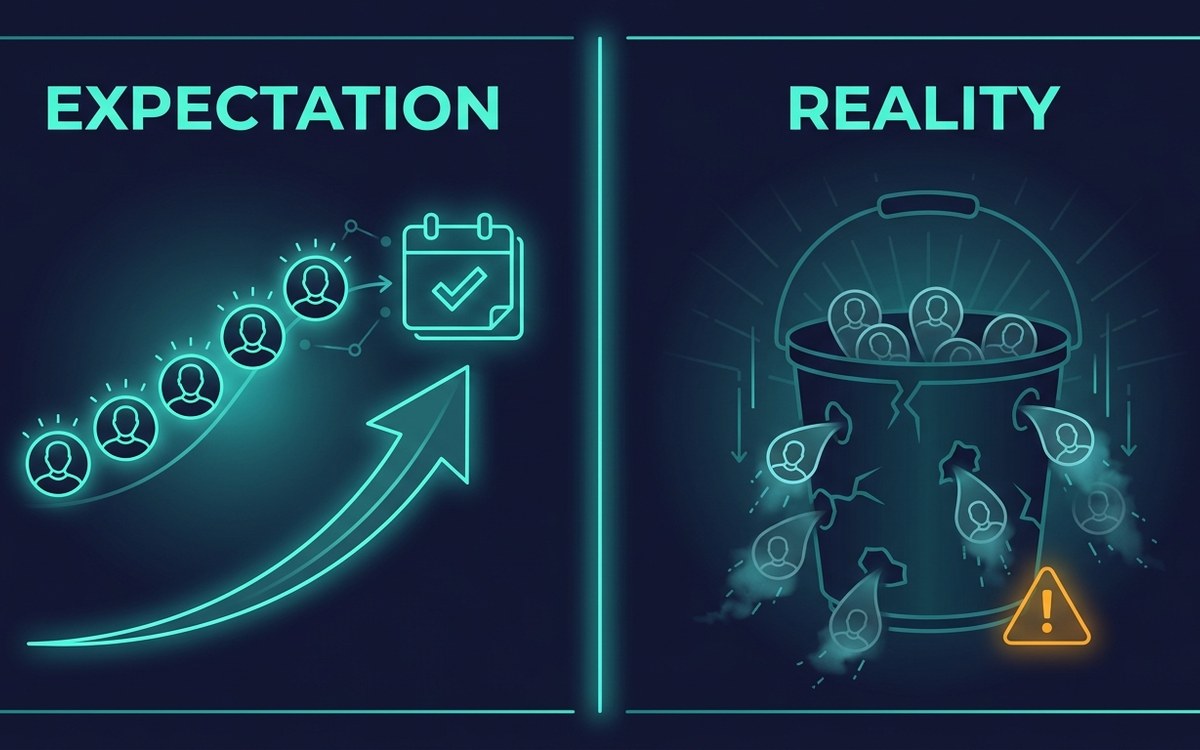
Here’s the pattern I see over and over. A new coach pours everything into the top of the funnel — posting daily, going on podcasts, showing up in communities — then lets every one of those leads evaporate, because there’s no system to collect and nurture them. Someone reads a post, nods, thinks “I should talk to her,” and three weeks later has forgotten you exist. There’s a hole in the bucket. More effort at the top doesn’t fix a leak at the bottom.
What actually works is almost boringly reliable, and it’s four pieces:
One freebie that solves one specific problem. Not a 40-page ebook nobody opens. The script for the conversation they’re dreading, a one-page diagnostic, the checklist you already use. Small, usable in ten minutes, good enough that they think “if the free thing is this good…”
One landing page with an email opt-in. One page, one promise, one field. The freebie sits behind it, so interest turns into a contact you keep instead of a scroll you never hear about.
A short run of welcome emails. The moment someone grabs your freebie is the warmest they will ever be, and most coaches answer it with a download link and silence. Send a few emails over the following days instead: why you do this work, the mistake you see most often, and a light invitation to talk.
One weekly email. Most people who join your list aren’t ready today. They’re ready in March, when something in their life shifts. A weekly email with something genuinely useful in it is what makes you the person they think of on that day.
So if you’re starting out: one freebie, one opt-in, one weekly email. Get that running before anything else. It compounds. Our guide to building a simple sales funnel for coaches walks the whole thing stage by stage, and this one covers which freebies actually get downloaded.
The objection I hear every single time is “isn’t it too early? I don’t have an audience yet.” It’s never too early — that’s exactly backwards. Building this now means every new follower gets captured from day one. Build it in year two and you’ve spent a year filling a bucket with a hole in it. 📩
And the numbers are less scary than they look, because subscribers and followers aren’t the same currency. A list of 50 engaged people is worth more than 10,000 passive followers — fifty people who asked to hear from you, in a place no algorithm sits in front of. Social media is how people find you. Email is how they buy from you.
The other objection is more honest: “I don’t know what to write.” That’s the number one reason I hear from coaches who don’t use email. I get it — I was in exactly that position when I started putting content out there. You open the editor, stare at the blank page, get stressed, close the tab. The fix isn’t inspiration. It’s answering one real client question per email, short.
Not sure what this should look like for the coaching business you’re starting? Answer a few questions about who you help and your free custom roadmap will map it out — the freebie, the landing page, the welcome emails, and the weekly email that turns interest into booked calls.
Claim my roadmapFree · No credit card · 3 minutes
Step 5: Get Your First Clients
Your first clients almost never come from strangers. They come from people who already trust you — and that’s not a shortcut, it’s how this actually works.
Trust is the expensive part of selling coaching, and with a former colleague, someone you used to manage, or a friend of a friend who mentioned last year that they were stuck, you already have it. So write down thirty people who respect your judgement. Send each a short, human message that doesn’t ask for a favour — it tells them specifically what you now help people with, and asks who comes to mind.
Be specific in every ask. “Let me know if you know anyone” is unanswerable; “is there someone on your team stepping into their first director role right now?” gives a brain something to search for.
The other underworked channel is adjacent professionals: therapists, accountants, HR consultants, physios. They meet people every week whose problem isn’t theirs to solve, and two or three real relationships there can quietly outperform a year of posting. There’s a much longer list in our guide to how to get coaching clients.
How to start a coaching business with no experience
With no clients yet, your job is to get results you can talk about. Take a small number of people through your offer at a reduced rate or free, in exchange for honest feedback and, if it goes well, a specific testimonial. Not endless free work — a defined handful, with an end date.
Ask for that proof the moment something goes well, not months later when the feeling has faded. And ask the useful questions: what was it like before, what changed, what would you say to someone hesitating? Before-and-after in the client’s own words is the closest thing to evidence this industry has.
Now the realistic part: this takes weeks, not days. A warm-network push produces conversations quickly because the trust exists, but conversations aren’t signed clients, and the channels that reach strangers run on a much slower clock. Anyone promising a full roster in thirty days is selling something. Plan your finances for a slow ramp and you’ll still be here when it turns.
Step 6: Build the Systems That Let You Scale Without Burning Out
Once clients are arriving, the constraint stops being demand and becomes you. Systems are how you stay good at coaching while the business grows.
Start with the boring plumbing. Scheduling that doesn’t involve six emails. Payments on a repeating schedule. An intake form so the first session starts with substance instead of admin. A consistent structure for sessions and for what you send afterwards. Each one saves half an hour a week and, more importantly, removes a decision.
Then set boundaries early, in writing, before you need them: session length, response times, rescheduling, when you’re not available. Coaches burn out on the invisible work — the between-session messages, the client who treats WhatsApp as included. Clear terms are kinder to everyone, and far easier to set on day one than in month six.
What to automate and what to keep human
Automate the mechanical: booking, reminders, invoices, the freebie delivery, the welcome sequence, the moment someone joins your list. Nobody ever felt less cared for because a reminder arrived on time.
Keep human what people are actually paying for: the coaching, the discovery conversation, the reply when someone tells you something hard. Automate anything that requires judgement and clients feel it immediately.
And then there’s the marketing — which is the part to hand off, and the part almost nobody does hand off. Coaches aren’t marketers. They don’t want to write subject lines or build automations. They became coaches because they love coaching. A coach I spoke with put it perfectly: “I don’t want a better kitchen. I want someone to cook dinner.” 🎯
How Nautilus Handles the Marketing So You Can Coach
You can build every piece of step 4 yourself, and plenty of coaches do. The catch is never the tools — it’s writing the freebie, the landing page, the welcome emails and then a weekly email, forever, in the weeks you’re fully booked with actual clients. That’s where nearly everyone stalls.
That gap is the whole reason Nautilus’s done-for-you email marketing exists. A real team plus AI builds and runs the entire funnel in your voice — your only job is to approve it. We only email people who asked to hear from you: no cold outreach, no bought lists.
One flat plan at $199 a month, no trial and no free tier, with a 30-day money-back guarantee on your first month — the details are on our pricing page. The comparison worth making is against the $500–$5,000 a month an agency quotes for the same scope.
So here’s the short version of all six steps. Pick someone specific. Make them one clear promise. Put a price on it you can say out loud. Build the freebie, the opt-in and the weekly email now, before you feel ready. Go to the people who already trust you. And keep going for longer than feels reasonable, because that’s the part almost nobody does.
Entrepreneur | Co-founder @ Nautilus, the done-for-you email marketing service for coaches & consultants. I write about email marketing, funnels, lead generation and everything I learned during the past 15 years building businesses, writing software and generating leads in the digital world.
Frequently Asked Questions
How much does it cost to start an online coaching business?
Far less than most people assume, which is both the appeal and the trap. The genuinely necessary pieces are a video calling tool, a way to schedule sessions, a way to take payment, a simple landing page, and something to send email from — and there are low-cost or free options for every one of those. What actually costs you is time and, if you choose to buy it, help with the marketing. The honest warning is that spending is not the constraint at the start. Coaches rarely fail because they underspent on tools; they stall because there was nowhere for interest to land and nobody kept in touch with the people who showed it. Registration, tax and insurance costs vary a lot by country, so check those locally with a professional.
Do I need a certification to become a coach?
In most places coaching is not a regulated profession, so no certification is legally required — but rules differ by country and by what you call yourself, and titles like therapist or counsellor are protected in many jurisdictions, so check locally if you are unsure. What a credential really buys you is structure, supervised practice and confidence, which matter a lot if you are new to the work. It buys you less than people expect in marketing terms: clients hire you because you clearly understand their specific problem, not because of the letters after your name. Corporate and executive buyers are the exception, since procurement often asks. If you are choosing between a long certification and getting five real clients, the five clients will teach you more.
How long does it take to get your first coaching client?
It depends entirely on where you are starting from, and anyone giving you a fixed number is guessing. If you have a warm network — former colleagues, an old industry, people who already respect your judgement — conversations can start within days, because the trust already exists. Turning those conversations into a paying client usually still takes weeks rather than days. If you are starting with no network in the space, expect months, because you are building trust from zero through content, search, podcasts and an email list, and those channels work on a slow clock. The realistic plan is to run both at once: warm outreach for near-term clients, and the freebie plus email list underneath so next year is not another standing start.
How do I price my coaching when I’m just starting out?
Price the package, not the hour, and treat your first number as a judgement call rather than a calculation. Look at what solving the problem is worth to the person buying, what comparable coaches serving the same kind of client openly charge, and be honest about your track record today. Then pick a number you can say out loud without flinching. Too low and you will resent the work and attract less committed clients; too high while you are privately unsure and you will discount the moment someone hesitates, which teaches the buyer the price was never real. Expect to raise it as results and proof accumulate — a good signal is when you are close to full and slightly relieved to hear a no. Raise it for new clients and honour what existing clients agreed to.
What tools do I actually need to start coaching online?
Fewer than the internet will try to sell you. A reliable video call tool, something that lets people book without six emails back and forth, a way to take payment on a repeating schedule, a simple landing page where people can request your freebie, and something to send your welcome emails and weekly email from. That is the whole starting stack. You do not need a course platform, a community app, a CRM or a full website in month one. Add tools when a specific bottleneck hurts, not in advance — and resist the urge to spend your first three months configuring software instead of talking to potential clients, which is one of the most common ways new coaches avoid the uncomfortable part.
Start With the Part That Compounds
One freebie, one opt-in, one weekly email — built and run for you. Get your free custom roadmap and see exactly what your funnel should look like from day one.
Claim my roadmapNo credit card · 3 minutes