Email Marketing for Accountants: How to Stay Top-of-Mind Year-Round
Your clients only think about you during tax season. Here's how to change that—without adding another task to your already-packed schedule.

The Tax Season Problem: Clients Forget You Exist

Here's the uncomfortable truth about running an accounting practice: for 9 months of the year, most of your clients don't think about you at all.
They call in January, panic through April, maybe reach out for an extension in October—and then you don't hear from them until the cycle repeats. Meanwhile, they're making financial decisions all year long without your input.
The average accounting firm loses 10-15% of clients annually—not because of bad service, but because clients simply forget who handled their taxes last year and call whoever shows up first in a Google search.
This "tax season tunnel vision" creates two major problems:
- Unpredictable revenue — Your income spikes January-April and flatlines the rest of the year
- Missed opportunities — Clients make costly financial decisions without consulting you because you're not on their radar
The accountants who thrive year-round have figured out something important: staying visible between tax seasons isn't optional—it's essential for client retention and practice growth.
Why Email Marketing Works for Accountants
Email marketing isn't just for e-commerce stores and tech startups. For accountants, it's arguably the most powerful client retention tool available—and here's why:
Incredible ROI
Email delivers $36 for every $1 spent—the highest ROI of any marketing channel. For a service business like accounting, the returns are even higher.
You Already Have the List
Unlike other businesses that struggle to build an audience, you have years of client email addresses sitting in your practice management software.
Trust Is Already Built
Clients already trust you with their most sensitive financial information. Emails from you get opened—42% average open rate for professional services.
Drives Additional Services
Regular communication surfaces opportunities for advisory services, bookkeeping, payroll, and other offerings beyond tax prep.
A simple monthly newsletter transforms your practice from "that person who does my taxes" to "my trusted financial advisor"—and that shift dramatically increases client lifetime value.
What to Include in Your Accounting Newsletters
The best accounting newsletters educate and remind—they position you as the expert clients should call before making financial decisions, not after.
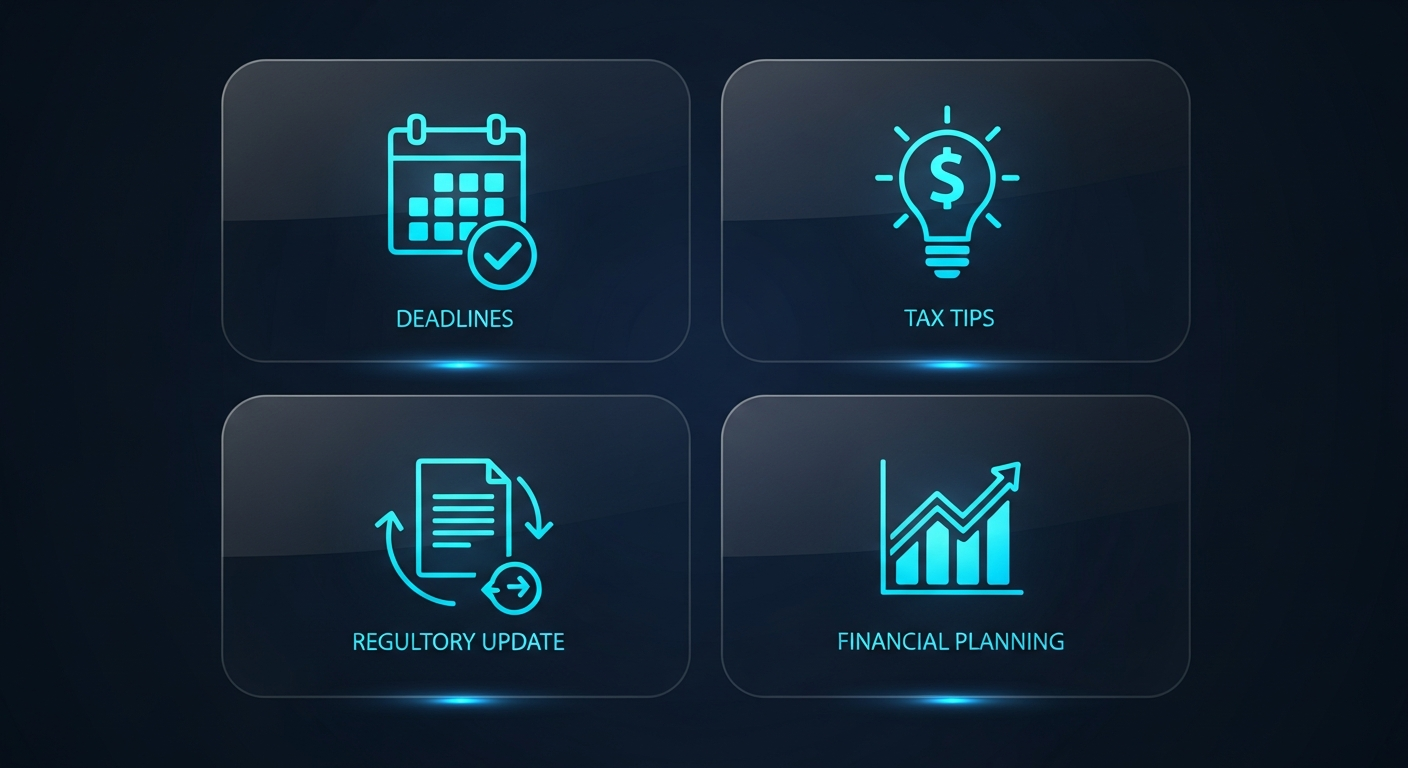
1. Tax Deadline Reminders & Updates
Timely reminders that prompt action and demonstrate your expertise. These are the emails clients actually thank you for.
Example topics:
- • "Q4 Estimated Tax Payment Due January 15—Here's What You Need"
- • "Tax Law Changes for 2026: What Small Business Owners Need to Know"
- • "Extension Deadline October 15: Last Chance Checklist"
- • "Year-End Tax Moves to Make Before December 31"
2. Monthly Tax-Saving Tips
Actionable advice that helps clients save money—and reminds them why they need a professional.
Example topics:
- • "5 Deductions Small Business Owners Miss Every Year"
- • "Home Office Deduction: Are You Calculating It Right?"
- • "Vehicle Expenses: Mileage vs. Actual Costs—Which Is Better for You?"
- • "Retirement Contributions: Reduce Your Tax Bill and Build Wealth"
3. Business Owner Financial Guidance
Position yourself as a strategic advisor, not just a tax preparer. This content drives advisory service revenue.
Example topics:
- • "Cash Flow Management: The #1 Reason Small Businesses Fail"
- • "Should You Take a Salary or Distributions? (It Depends)"
- • "When Does It Make Sense to Incorporate?"
- • "Quarterly Financial Review: 5 Numbers Every Business Owner Should Track"
4. Regulatory Changes Explained Simply
Translate complex tax law changes into plain English. Clients appreciate—and remember—who helped them understand.
Example topics:
- • "New 1099-K Reporting Rules: What Side Hustlers Need to Know"
- • "IRS Increases Standard Deduction for 2026—Here's What It Means"
- • "Beneficial Ownership Reporting: Is Your LLC Compliant?"
- • "State Tax Updates: Changes That Affect [Your State] Businesses"
Your 12-Month Email Calendar
Here's a month-by-month guide to what your newsletters should cover. Notice how every month has relevant content—there's never a reason to go silent.
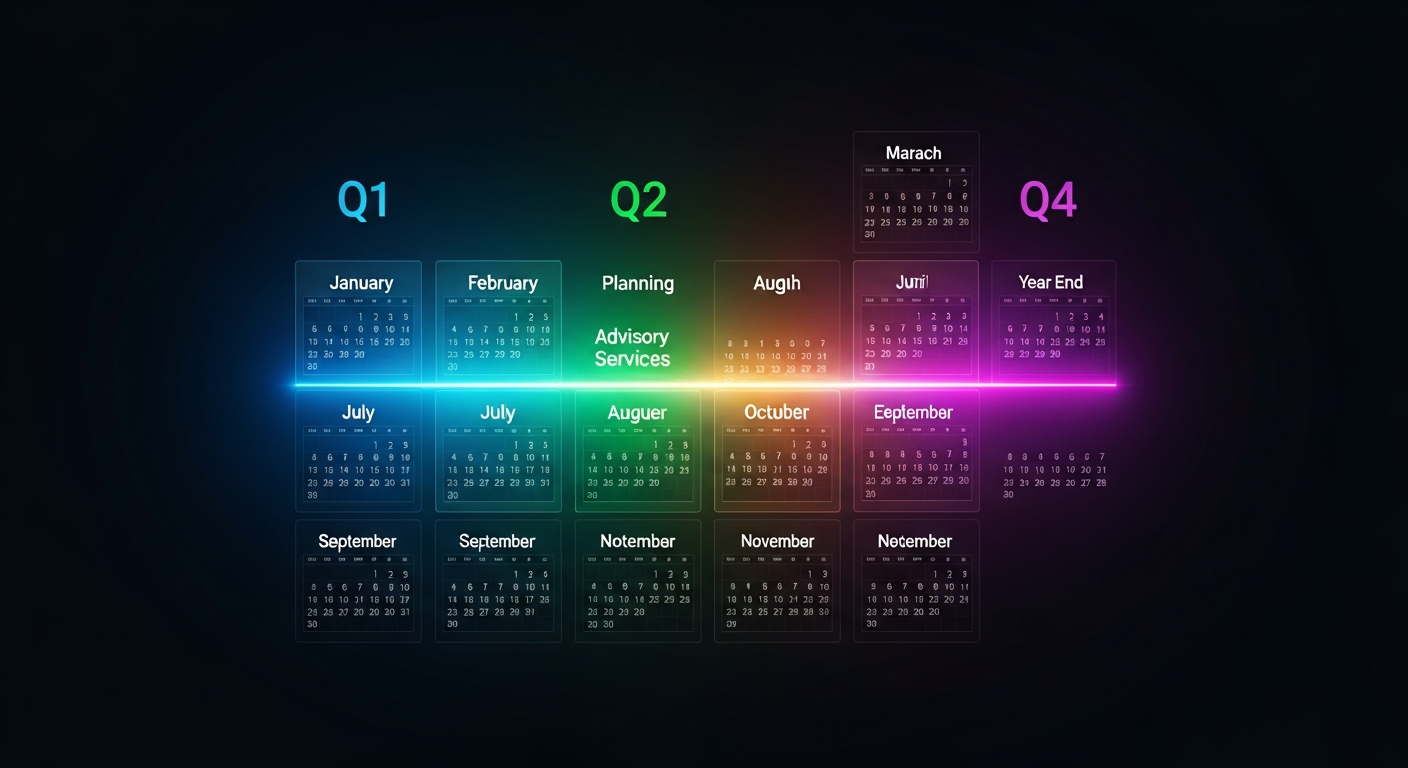
Q1: Tax Prep Season
- January: Document checklist, Q4 estimated payment reminder
- February: Early filing benefits, common mistakes to avoid
- March: Deadline reminder, last-minute deductions
Q2: Post-Filing & Planning
- April: Extension info, Q1 estimated payment reminder
- May: Mid-year tax planning tips
- June: Q2 estimated payment, retirement planning
Q3: Business Advisory
- July: Mid-year financial review checklist
- August: Back-to-school business expenses
- September: Q3 estimated payment, year-end prep begins
Q4: Year-End Strategy
- October: Extension deadline, tax projection review
- November: Year-end tax moves, charitable giving
- December: Final year-end actions, next year preview
How to Automate Without Losing the Personal Touch
Here's the objection we hear from accountants: "My clients expect a personal relationship. Won't automated emails feel impersonal?"
The truth is the opposite. Silence is what feels impersonal. When clients don't hear from you for months, that's when they feel like just another file in a cabinet.
Regular, relevant communication—even if it's automated—actually strengthens relationships because it shows you're thinking about their needs year-round.
The Automation Reality Check
Without automation:
Clients hear from you 1-2 times per year (during tax season)
With automation:
Clients receive valuable guidance 12 times per year
Which approach actually feels more personal to the client?
Modern AI-powered newsletter tools make automation effortless:
- AI writes the content — Industry-specific articles, tax tips, and deadline reminders generated automatically
- Professional design handled — Clean, mobile-friendly layouts that reflect well on your practice
- Scheduling on autopilot — Newsletters go out consistently without you touching anything
- You stay in control — Review and approve content if you want, or trust the system to handle everything
The time investment? About 3 minutes to set up, then it runs automatically. Compare that to the 4-6 hours it takes to write, design, and send a newsletter manually.
Getting Started
Every month you wait is another month your clients aren't hearing from you—and another opportunity for them to forget your name or find another accountant.
The accounting firms that thrive don't just do great work during tax season. They stay visible, valuable, and top-of-mind all year long. Email marketing makes that possible without adding hours to your workweek.
Ready to stay top-of-mind year-round?
Nautilus generates professional newsletters for accounting firms—written, designed, and sent automatically. Your clients get valuable content; you get stronger relationships.
See How It Works for Accountants